Features
Part of Which five decisions decide your business model type?
Business model types examples: eight archetypes and what breaks each one
Eight business model archetypes with named examples, showing where money enters, what keeps it flowing, and the condition that breaks each one.
An archetype is a pattern, not a company. These eight business model patterns are easier to hold onto when a name hangs off each one, so every entry below pairs the archetype with a business you can go and look at.
Each entry answers three questions: where the money enters, what keeps it flowing, and what breaks it. Most real businesses run two or three of these at once.
What to take away
- Every archetype has one breaking condition. That condition is usually the thing nobody is watching.
- The named examples show the pattern, not a verdict on the company's finances. Public filings are the place to check those.
- Most businesses are two or three archetypes at once, each with its own clock and its own arithmetic.
- If you cannot write your breaking condition in one sentence, you do not know your model yet.
The loss leader and the consumable: Keurig
The brewer sells near cost and the K-Cup pod carries the margin. The machine is a durable purchase, and it creates a replacement need on a predictable rhythm. Acquisition is paid for once and repaid many times.
A 12-count box of K-Cup pods typically retails for $8 to $12. The brewers themselves commonly sell for $79 to $179, often discounted further on promotion.
It breaks when the consumable becomes substitutable. Keurig's original pod patents expired in 2012, third-party pods appeared, and the margin migrated away from the machine.
The 2014 Keurig 2.0 brewer blocked unlicensed pods, and the backlash was immediate. Every defense since, from pod-locking firmware to licensing deals, is an attempt to hold a position the economics no longer guarantee.
The pattern is strongest where the consumable is hard to reproduce, weakest where it is a commodity in a special shape.
The free tier that qualifies buyers: Slack
The free workspace is usable indefinitely, and the paid tier sells message history, unlimited apps, and admin controls. Free users cost something, so the tier only works when they generate more demand than they absorb, by bringing colleagues in or by hitting a limit that arrives as they succeed.
Slack's free plan keeps 90 days of message history and caps apps at 10, which is the boundary the paid tier sells past. Salesforce bought Slack in 2021 in a deal valued near $27.7 billion, so the free tier now sits inside a larger subscription business.
It breaks when the free tier is quietly sufficient. If most people who would have paid can get what they need for nothing, that tier absorbs demand rather than creating it. No conversion test fixes a boundary drawn in the wrong place.
The diagnostic is not the conversion rate. It is whether people upgrade because of something that happens to successful users, or something you withheld.
The license and the support contract: Red Hat
The software is open, and the subscription sells updates, compatibility, security response, and someone to call. The customer's exposure grows with how much they depend on the thing, which is what makes renewal defensible rather than a tax.
Red Hat sells Enterprise Linux by subscription, per system per year: typically a few hundred dollars at the self-support tier and into the low thousands with premium support. IBM bought Red Hat in 2019 for about $34 billion.
It breaks in two directions. If support stops being needed, renewal becomes a charge on the past, the same failure that ends weak arrangements in subscription models. If the product is kept fragile enough to require support, the incentive inverts and customers eventually notice.
The brokered transaction: Houlihan Lokey
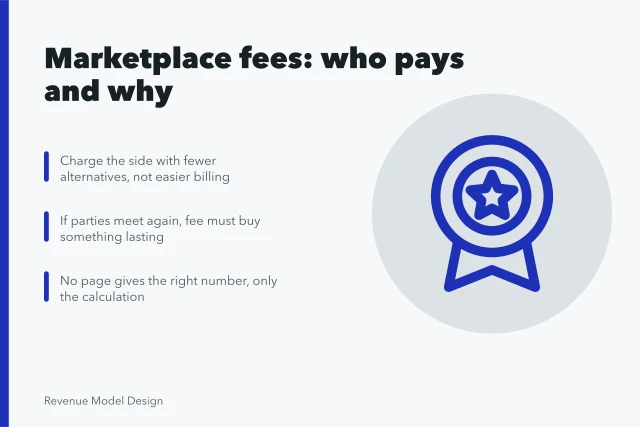
The bank matches sellers of private companies with buyers and takes a fee on the match without ever holding the asset. Capital requirements are low, fees per deal are high, and the gap between what each side knows is the product.
Houlihan Lokey is an independent advisory firm founded in 1972 and headquartered in Los Angeles, and it works mainly in the middle market. Sell-side fees there are typically a retainer against a success fee of about 1% to 2% of deal value, so the bank is paid when a match closes, not before.
It breaks when the gap closes. Once both sides know each other, the second transaction need not pay a fee. Brokerage is strongest where deals are infrequent, stakes are high, and each match differs.
The economics of matching, search and fees is treated in MIT's course on economics and e-commerce, and the operating version of the same pattern is in marketplace models.
The resold capacity: Airbnb
Nights are not bought in bulk, but the pattern is the same shape as a wholesaler's: supply is aggregated on terms the supplier accepts, and resold in small flexible slices at a premium for flexibility. The platform adds value by pooling demand too small or too lumpy for any single host to serve.
Airbnb charges hosts a service fee, typically 3% when the guest pays a separate fee and about 14% to 16% under the host-only model. That fee is the spread on committed supply, taken out of the host's payout.
It breaks on usage. The commitment to suppliers is a fixed cost that runs whether or not the slices sell, and a demand shortfall hits at full force. It also breaks when the supplier decides to sell directly, which they will if the margin is visible and the operational burden turns out to be manageable.
The audience and the advertiser: The New York Times
Reporting is free to read on a metered basis, and access to the audience is sold to advertisers. Attention has value to a third party that the audience itself would never pay in cash, which is how this pattern reaches scale a paid product cannot.
The Times passed 10 million subscribers in 2023, and it now earns more from digital subscriptions than from advertising. A basic digital news subscription is typically $4 every four weeks for the first year, then renews at about $17 every four weeks.
It breaks in a specific way: the buyer of attention slowly shapes what the audience gets. Pressure is not one decision but a buildup of choices that each look reasonable and together change the product.
It also breaks when the audience is small and high-value, because there is not enough of it to sell and you have stopped charging the people who valued you most.
The licensed brand and method: McDonald's
The operator uses the name, the system, and the supply arrangements, and pays an initial fee plus a continuing royalty on sales. In the US the initial franchise fee is $45,000 and the monthly service fee is 4% of gross sales, and McDonald's usually owns or leases the site and collects rent on top.
Expansion is funded by the operator, whose own capital is at risk, so your cost of adding a location is mostly the cost of supporting it.
It breaks on consistency. Your brand sits in the hands of people you do not employ, and one operator's failure is attributed to all of them. The structure depends on the system being documented and enforced.
Franchise arrangements are regulated, and the disclosure obligations attached to them vary by state as well as by federal rule. Settle the legal structure with a qualified franchise attorney before the commercial one. In the United States the general prohibition those obligations sit under is the statute on unfair or deceptive acts.
The installed base and the aftermarket: Caterpillar
Machines are sold through an independent dealer network of about 160 dealers, and the money accumulates over a decades-long life through parts, service, and rebuilds. Once a machine is installed, switching means replacing an asset with years left in it, so the aftermarket holds a position the original sale does not.
It breaks when independent servicing becomes viable, when parts become interchangeable, or when right-to-repair rules settle in the customer's favor. Caterpillar has opposed right-to-repair proposals in several states, and how those rules land decides how long the aftermarket stays closed.
It also breaks slowly if aftermarket margin becomes visible enough to poison the original sale, because buyers who expect to be charged for the life of the asset discount the purchase accordingly.
The eight archetypes side by side
| Archetype | Named example | Where money enters | What breaks it |
|---|---|---|---|
| Loss leader and consumable | Keurig | Consumable replacement | Substitutable refills |
| Free tier that qualifies buyers | Slack | Paid upgrade at a real limit | Free tier is sufficient |
| License and support contract | Red Hat | Recurring support subscription | Support stops being needed |
| Brokered transaction | Houlihan Lokey | Fee on the match | Both sides know each other |
| Resold capacity | Airbnb | Spread on committed supply | Demand shortfall, supplier goes direct |
| Audience and advertiser | The New York Times | Advertiser access | Advertiser shapes the product |
| Licensed brand and method | McDonald's | Initial fee plus royalty | Operator inconsistency |
| Installed base and aftermarket | Caterpillar | Parts, service, rebuilds | Independent servicing, right to repair |
Worked example: reading a pattern onto your own business
Take the three beats and answer them for what you actually do.
- Where does the money enter? Name the transaction and the party who pays it.
- What causes the next payment? Name the mechanism, not the goodwill.
- What would have to change for it to stop? Name the condition and who is watching it.
A business selling licenses with support and an aftermarket has three clocks running, and each one breaks differently. Reporting them as one line hides which clock is running down.
For the fuller comparison of the types, see the business model types overview. For the axes that generate these patterns rather than the patterns themselves, see the business model types framework.
Common questions
Why name companies if their economics are not visible from outside?
The name fixes the pattern in memory and gives you something to go and read about. It is not a claim about their margins. Public filings and annual reports are where the numbers live, and a licensed advisor is who to ask about them.
We look like three of these at once. Is that a problem?
It is normal, and it is only a problem when the three are reported as one line. Each archetype has its own clock and its own breaking condition, so each needs its own arithmetic.
Which archetype is most durable?
None of them on its own. Durability comes from the breaking condition being watched. The patterns that look safest are the ones where nobody is watching because nothing has gone wrong yet.
How do we tell which one we are?
Answer where the money enters, what causes the next payment, and what would have to change for it to stop. Three sentences, and the third is the one people find hardest to write.