
Industry
Part of Getting service models right the first time
Service models case study: the 2027 review
A service models case study tracking one firm's margin decline, the three explanations its owners tested, and the senior-share call that reset its ceiling.
This is a constructed example. No firm is described, no figures are real, and nothing here is a benchmark. The arithmetic holds whatever numbers you substitute.
The pattern is common: demand the firm cannot serve, revenue rising, margin falling, and owners who are certain they have a sales problem.
What to take away
- Rising revenue with falling margin is usually a capacity signal, not a pricing one.
- The number that caps a service firm is the share of delivered hours that needs its most senior people.
- Hiring into a senior-review constraint makes the constraint worse before it makes anything better.
- Lowering the senior share takes about a year and no client is ever waiting for it, which is why it stalls.
- Client concentration and the timing gap between earned and collected fees both bite hardest during growth.
The invented firm
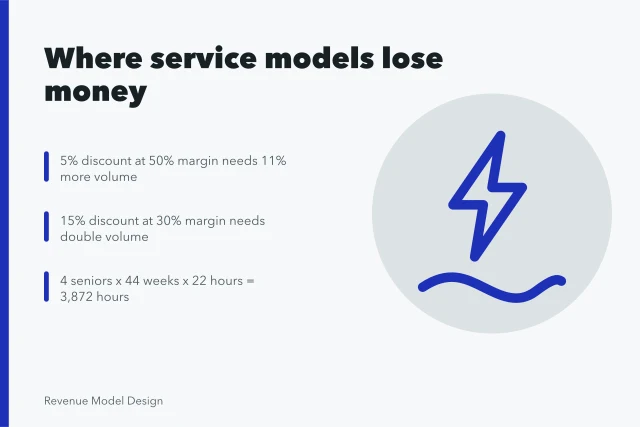
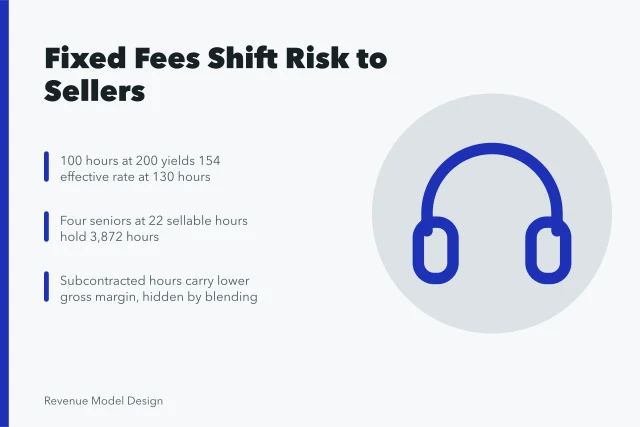
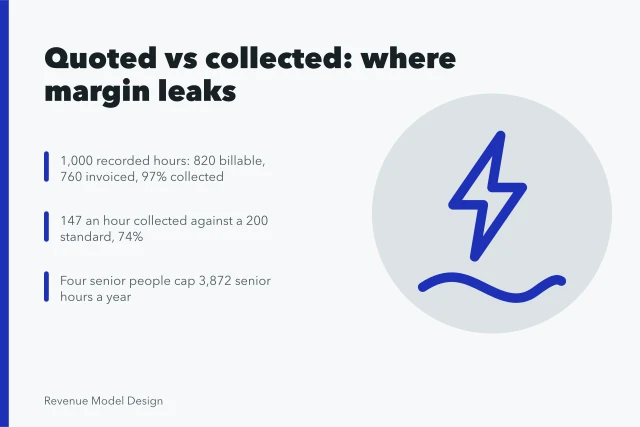
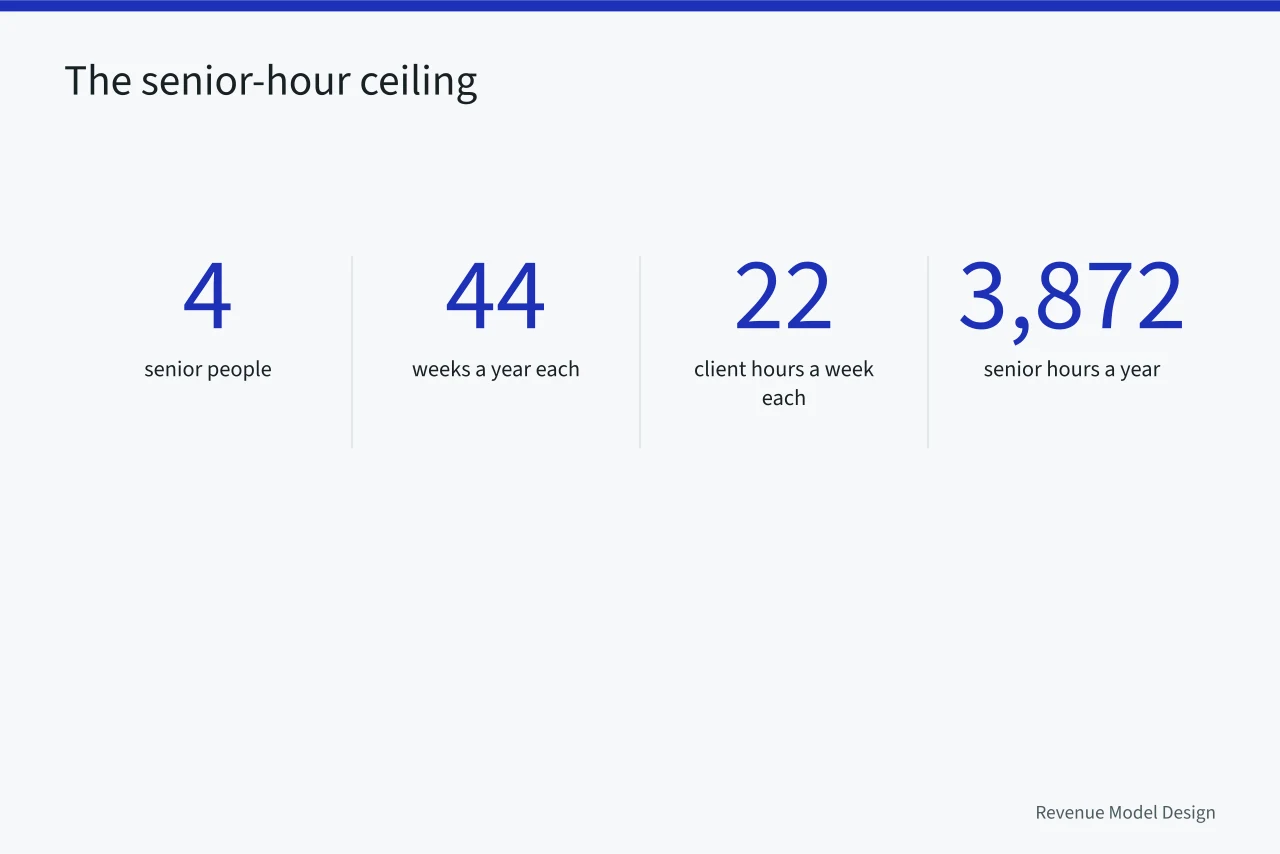
Four senior people. Each works 44 weeks a year. After selling, hiring, recruiting and running the place, 22 hours a week remain for client work. That is 3,872 senior hours a year, and it is the only genuinely fixed quantity in the business.
Delivery practice requires a senior person on half of all delivered hours: they scope it, review it, and present it. So the firm can deliver 7,744 hours a year. Every hour past that is late, or it ships without the review the firm promises clients.
Three explanations, one record
Revenue was up. Utilization was up. Margin was down. Three explanations were offered in the room.
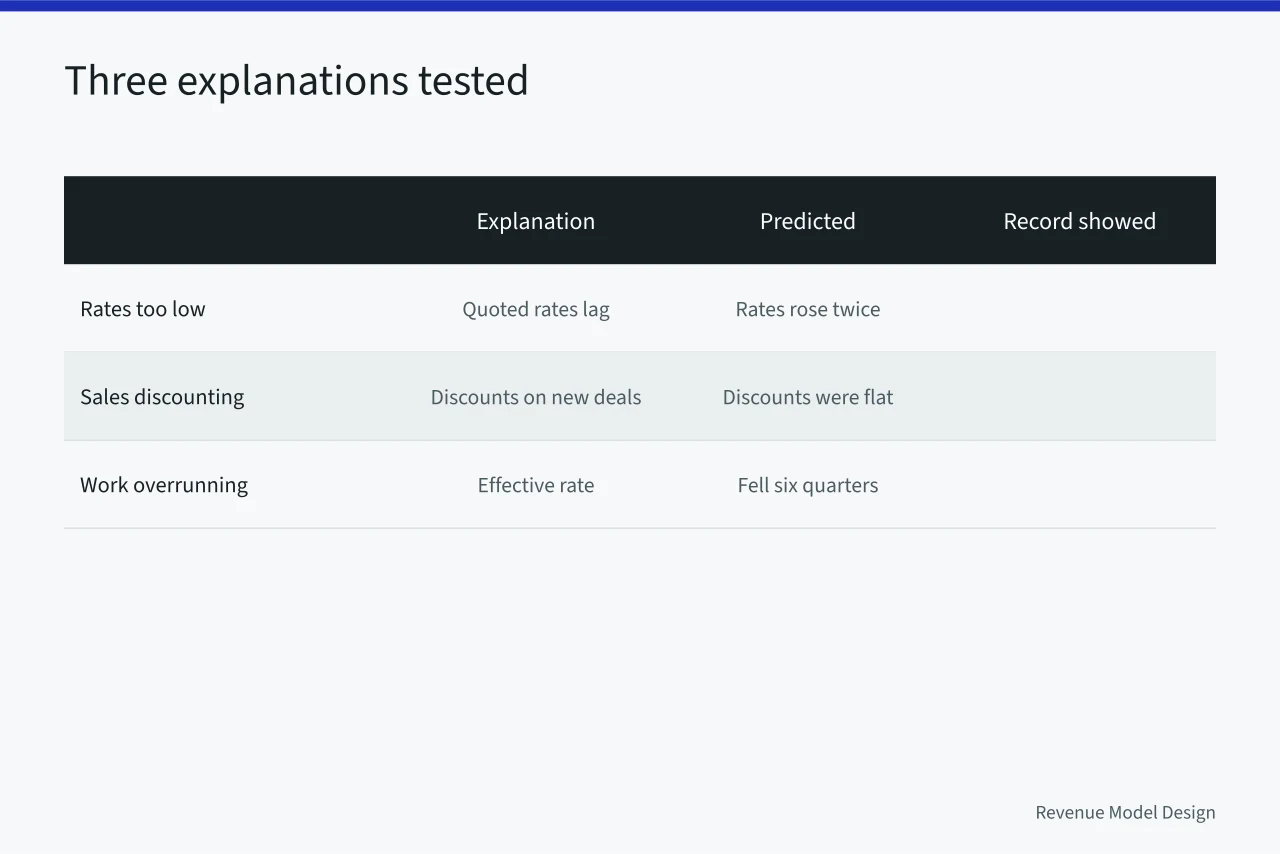
| Explanation | What it predicts | What the record showed |
|---|---|---|
| Rates are too low | Quoted rates lag the market | Quoted rates had risen twice |
| Sales is discounting | Discounts on new deals | Discounts on new deals were flat |
| Work is overrunning | Effective rate below quoted, widening | Effective rate had fallen for six quarters |
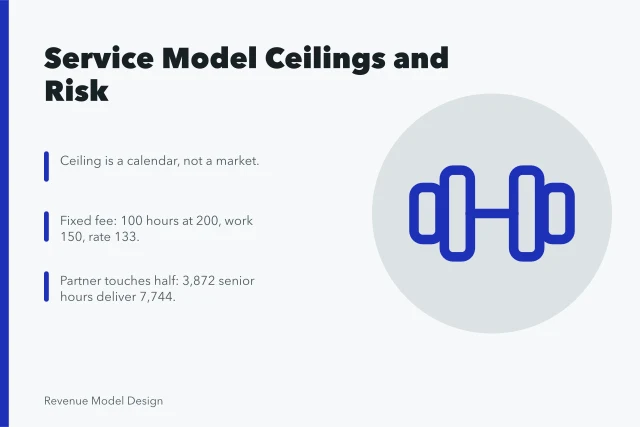
Only the third matched. A fee built from 100 hours at a quoted 200 earns 154 if the job takes 130 hours and 133 if it takes 150. No discount was ever agreed. The invoices read full price.
The firm was working for two thirds of its own rate on its worst jobs and nobody had signed off on it.
Why hiring made it worse
The two obvious moves were a rate rise and more hires. A rate rise helps margin and does not touch the ceiling. Hiring was worse than neutral: every new person consumed senior review hours, and review was already the binding resource.
That is why margin fell fastest in the two quarters after each hire. The firm added capacity to the part of the business that was not constrained and loaded the part that was.
The decision that moves the ceiling
The lever is the senior share itself, not the headcount.
Show the numbers
| 50% | 7,744 |
|---|---|
| 35% | 11,063 |
| 25% | 15,488 |
| 15% | 25,813 |
Going from half to a quarter doubles the firm without adding a partner. That is a documentation decision: worked examples, a review checklist, and a defined point where a senior must look.
It does not happen on its own because it is the only work in the firm no client is waiting for. Treating the constraint as something to design around rather than complain about is the standard operations reading, and MIT's operations management course works through why relieving anything else changes nothing.
Two quiet problems growth creates
Concentration rose while nobody watched. Ten clients are at these revenue percentages:
- 30
- 18
- 12
- 10
- 8
- 7
- 5
- 4
- 3
- 3
The top three are 60% of revenue. Losing the largest would need 43% growth from everyone else just to get back to level. Report that monthly beside revenue; it costs nothing.
Cash is the second. Payroll leaves monthly while fees arrive only after delivery and acceptance. A firm that grows needs more working capital every quarter it grows. The gap between when revenue is earned and when it is received follows the accounting methods in IRS Publication 538, which is why a profitable firm can still run short.
What this case does not show
It does not show that documentation always works, that these ratios apply anywhere, or that the third explanation is always right. It shows how to tell the three apart using records a firm already keeps.
The wider version of the ceiling argument is in service models, and the fee structure question in pricing architecture. Cost behavior sits in unit economics, and the point where the answer becomes a different business rather than a better one in model innovation.
Common questions
Is 22 sellable hours a week realistic?
It is invented. Substitute your own. What matters is that it is the number left after everything else a senior person does, and that most firms have never computed it.
Could the firm have simply turned work down?
Yes, and declining deliberately beats delivering everything late. It also caps revenue at the current ceiling, which is a decision worth making on purpose rather than by drift.
How long does lowering the senior share take?
About a year to show in the numbers, because it requires writing, training, and then trusting the review point. Firms that expect a quarter abandon it in a quarter.
Does raising rates help at all here?
It helps margin and does nothing for capacity. Doing both is the sensible answer, and confusing one for the other is what produced six quarters of the wrong conversation.