Rules
Affiliate Revenue Model Design for Canadian Bloggers: CRA Rules
Affiliate revenue model design in Canada: CRA reporting, GST/HST registration and disclosure rules for Canadian bloggers who earn commissions on links.
What to take away
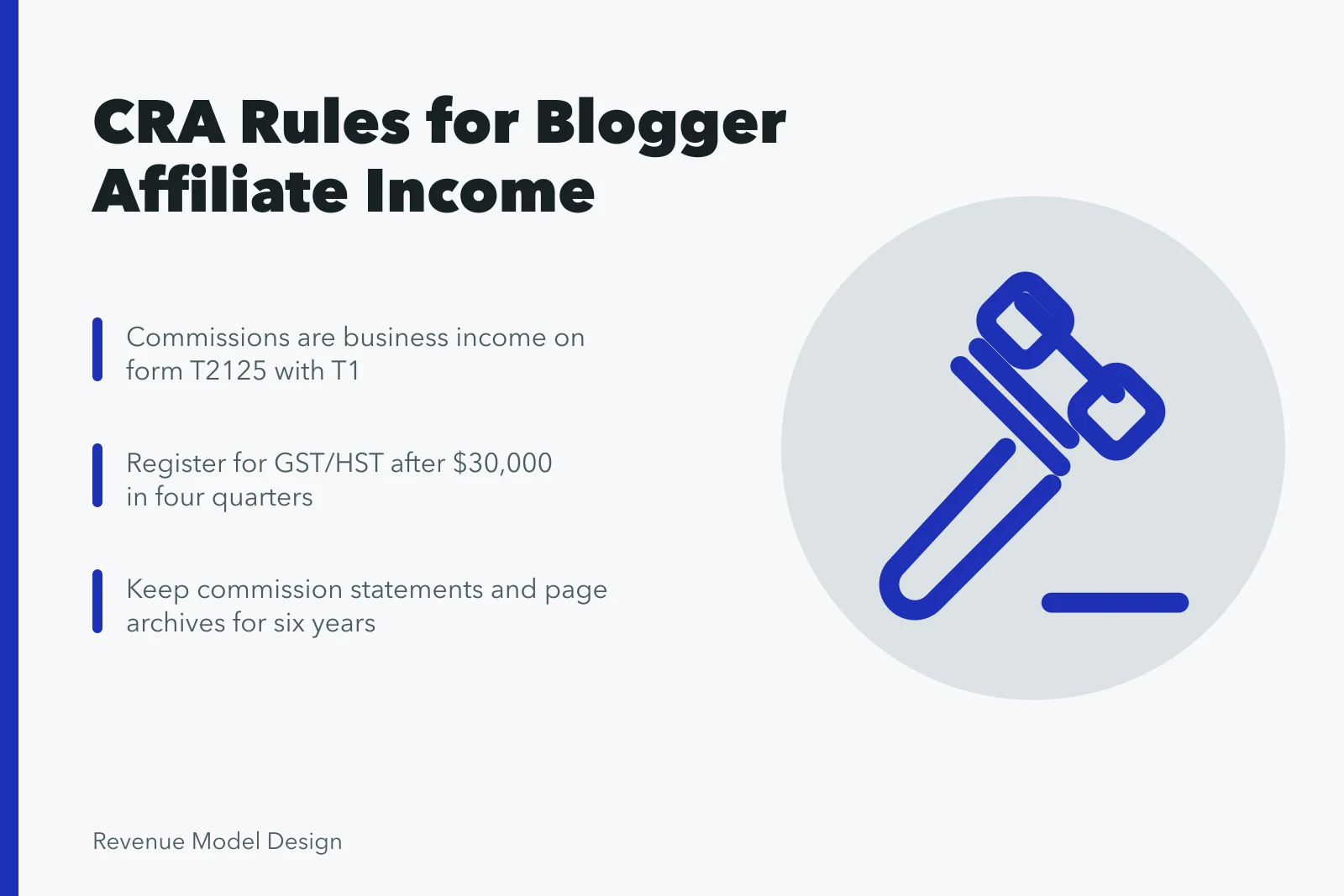
- The Canada Revenue Agency treats affiliate commissions as business income, reported on form T2125 alongside your T1 return.
- GST/HST registration becomes mandatory once taxable revenue passes the small supplier threshold across four consecutive calendar quarters.
- Disclosure is a legal duty under the Competition Act and Ad Standards guidance, not a courtesy to readers.
- Keep commission statements, payout records and page archives for six years from the end of the tax year.
- Skipping registration lets the CRA assess tax you never collected, plus interest and a penalty.
Who has jurisdiction over affiliate income
The Canada Revenue Agency decides how commission income is taxed, and for almost every blogger it counts as business income. The test is whether you carry on an activity with a reasonable expectation of profit.
You report the total on form T2125 and file it with your T1 return. Affiliate marketing pays on a tracked link, but the tax treatment follows the income, not the label.
Disclosure belongs to other regulators. The Competition Bureau enforces the Competition Act, which bans materially false or misleading representations. A warm review that hides a paying link can breach that section. Ad Standards publishes Influencer Marketing Disclosure Guidelines that agencies and brands write into Canadian contracts.
Provinces add their own layer. Each has consumer protection legislation on deceptive marketing, and Quebec's Consumer Protection Act is the strictest. If you sell to readers there, its clarity rules reach your pages.
If you mix ads, affiliate links and your own products, a business model types checklist helps you separate the streams before you file.
What a compliant disclosure contains
A compliant disclosure says you may be paid, appears at or before the link, and reads plainly to an ordinary person. Three elements have to be present:
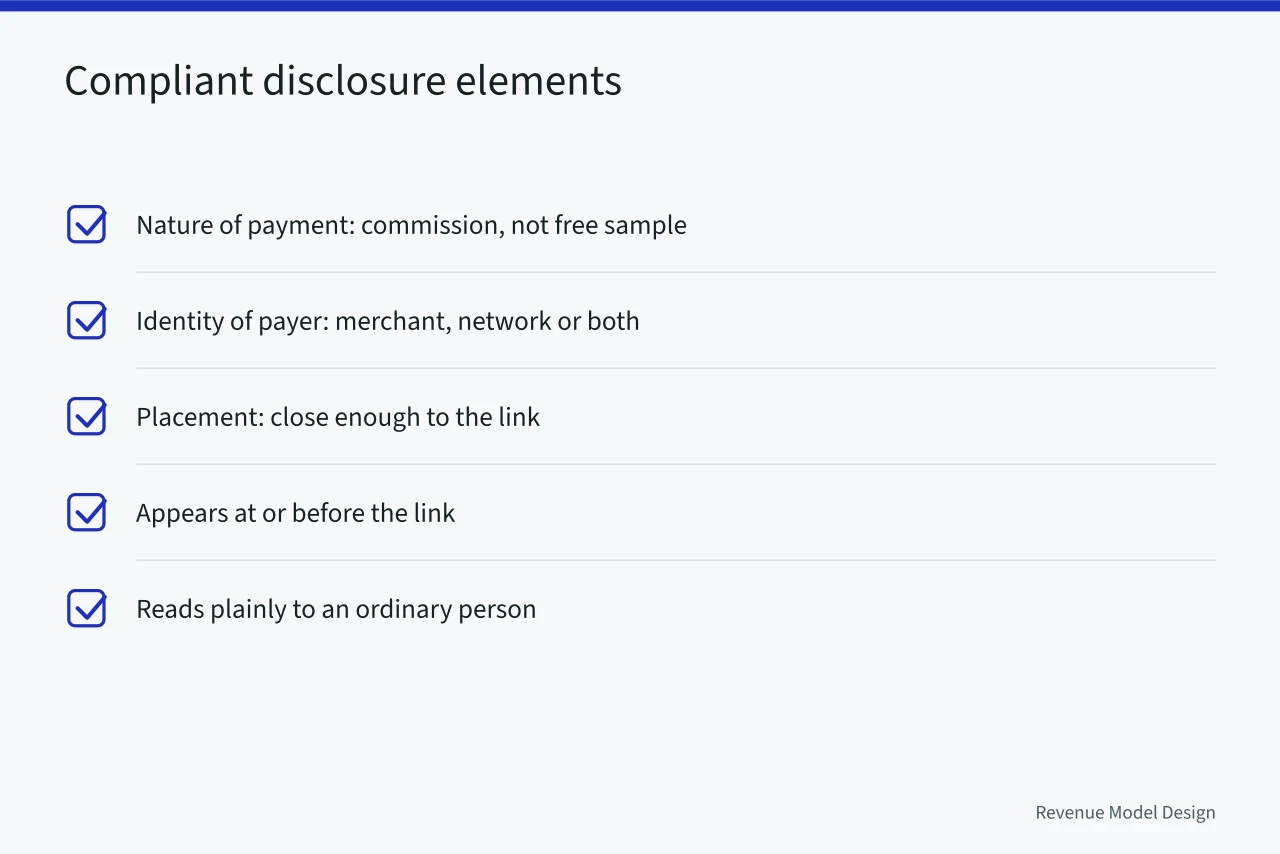
- The nature of the payment, which is commission rather than a free sample.
- The identity of who pays, whether merchant, network or both.
- The placement, close enough to the link that nobody clicks without seeing it.
A note buried in a site footer fails all three. The Federal Trade Commission's native advertising guide explains why placement carries as much weight as wording, and Canadian guidance follows the same reasoning.
Gifted inventory is not an exemption. Paid reviews, sponsored posts and free products sent for coverage fall under the same duty, and the CRA normally treats a gifted item as income at fair market value.
A disclosure that lives only on a separate policy page is not attached to the link, and a reader who arrives mid-article never sees it.
Records to keep for CRA affiliate income
Keep a trail that lets a reviewer rebuild your income without your memory or your dashboard logins. Six years from the end of the tax year is the retention rule.
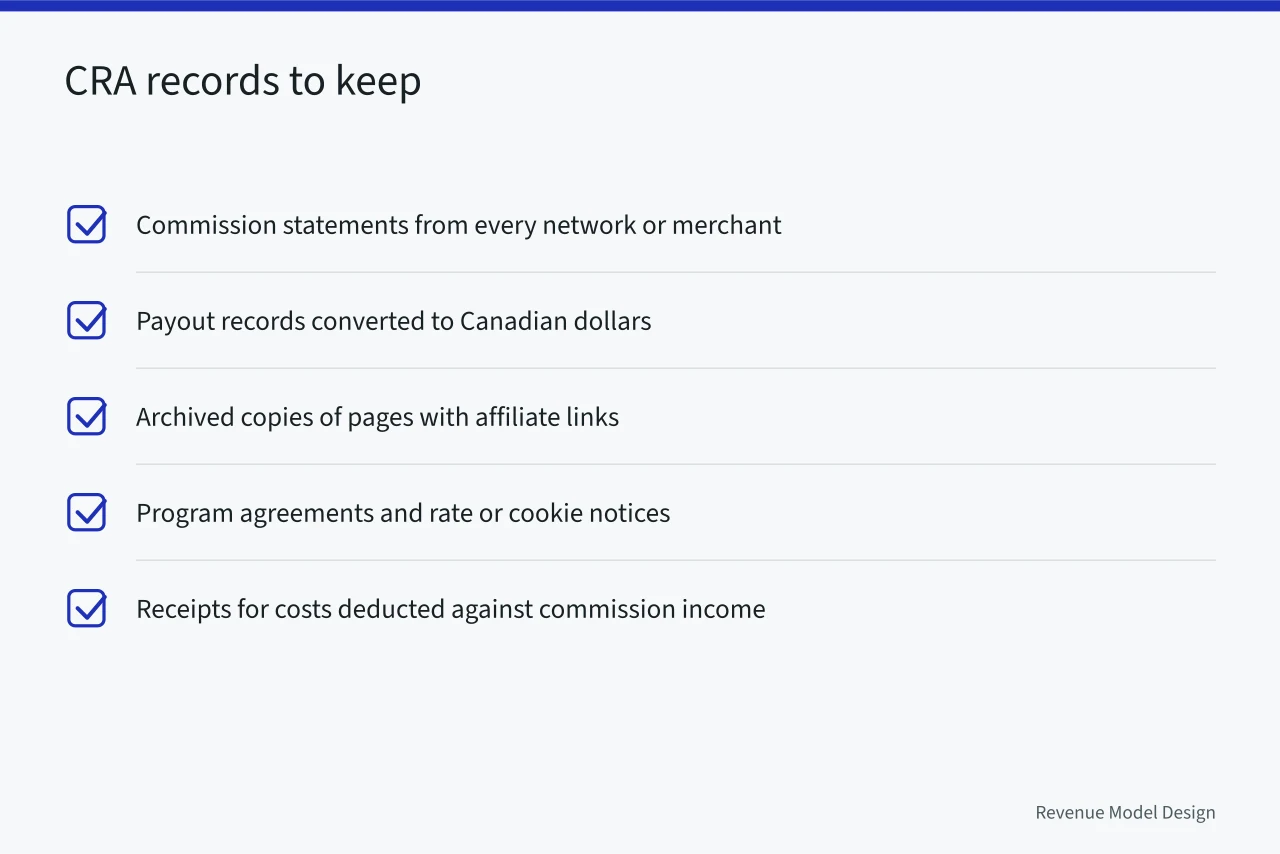
- Commission statements from every network or merchant, month by month
- Payout records showing what reached your bank, converted to Canadian dollars
- Archived copies or screenshots of the pages that carried affiliate links
- Program agreements and any notice of a rate or cookie change
- Receipts for costs you deduct against commission income
Sorting out what counts as a real cost of earning that income is harder than it looks, and unit economics examples shows how the obvious unit can mislead.
What happens if you do not comply
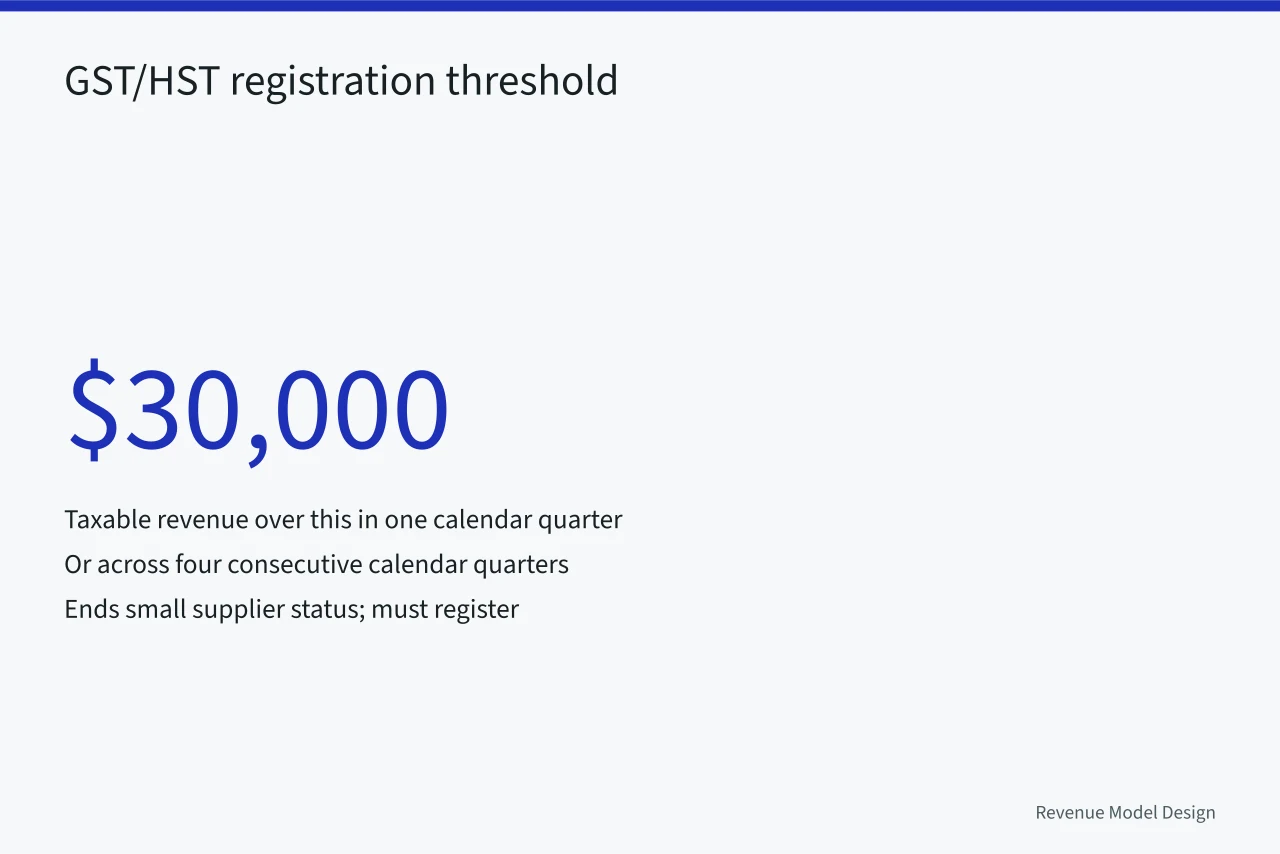
Registration is the part with teeth. Taxable revenue over thirty thousand dollars in a single calendar quarter, or across four consecutive calendar quarters, ends your small supplier status. From that point you must register, charge GST/HST and file returns on a schedule.
The assessment lands on you. A customer from two years ago cannot be billed retroactively, so the tax you failed to collect comes out of your own pocket, with interest and a penalty added. Input tax credits on business costs may be lost as well.
Disclosure failures carry a different cost. The Competition Bureau can seek court orders and administrative monetary penalties, and a brand can end a contract when its rules are ignored. Where a paid membership sits beside your links, subscription models questions covers how those two revenue types are treated.
Where the rules differ by province
The tax you charge follows the destination of the supply, so registering in one province does not settle the others.
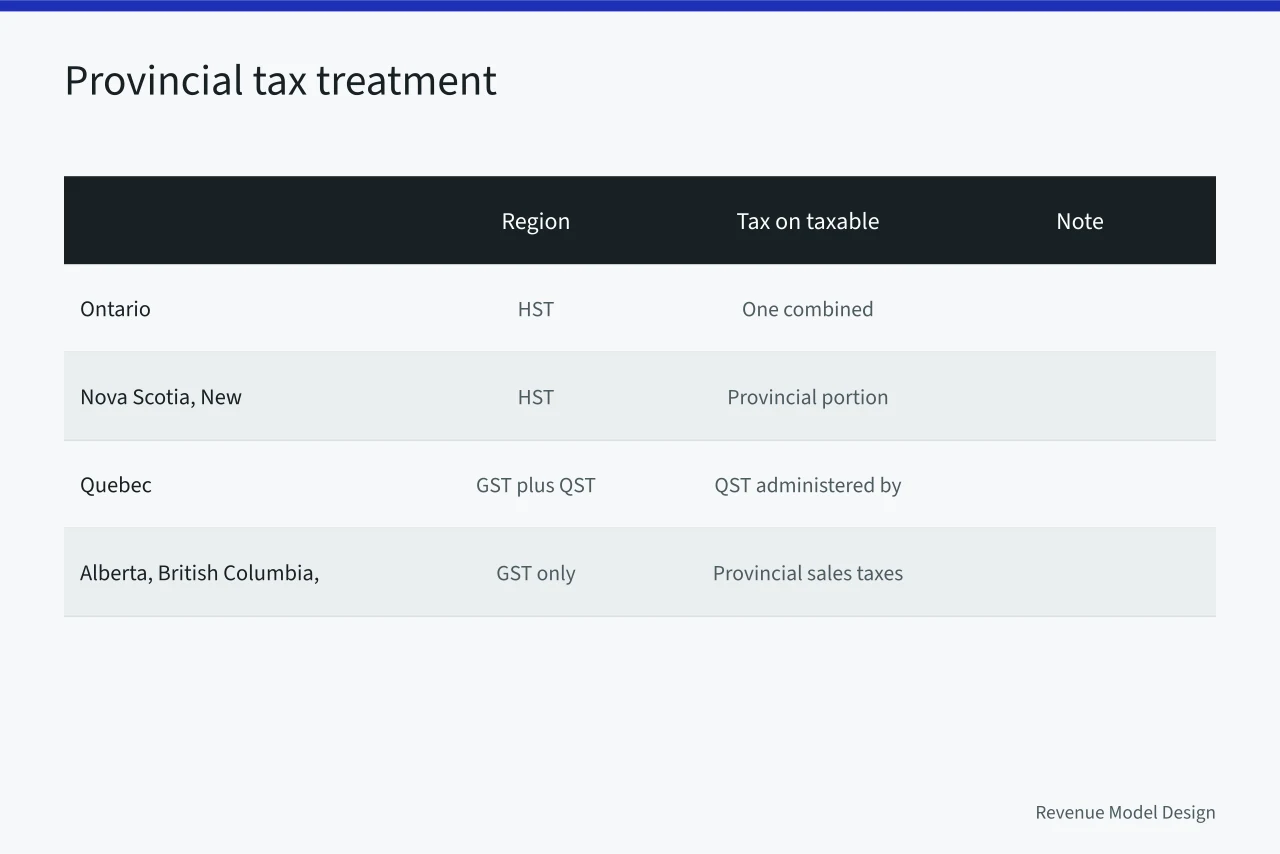
| Region | Tax on taxable supplies | Note |
|---|---|---|
| Ontario | HST | One combined registration |
| Nova Scotia, New Brunswick, Newfoundland and Labrador, Prince Edward Island | HST | Provincial portion folded into the federal rate |
| Quebec | GST plus QST | QST is administered by Revenu Quebec |
| Alberta, British Columbia, Saskatchewan, Manitoba and the territories | GST only | Provincial sales taxes, where they exist, apply on their own terms |
Platform rules differ again. Many networks pay in US dollars, and the threshold is still tested in Canadian dollars, so convert each payout before you total it.
Tracking income by source rather than one lump figure is what keeps a return defensible, and business model types metrics sets out which figures carry weight when a reviewer asks.
Common questions
Can the CRA treat affiliate income as a hobby rather than a business? Only where there is no reasonable expectation of profit. A steady stream of tracked commissions normally points to a business, and that means form T2125.
Do I charge GST/HST to a US affiliate network? The place of supply rules decide. A supply made to a non-resident business is generally zero-rated, but you still need to be registered to report it.
Does the disclosure have to be in French? For readers in Quebec, French is expected under provincial language law, and a French line beside the English one is the safer pattern.
How long do I keep payout screenshots? Six years from the end of the tax year they belong to, the same period that applies to your income records.