Costs
Part of Getting service models right the first time
4 points on service models checklist that matter
A service models checklist covering the estimate, the scope record, the senior-hour ceiling, and the collection chain, with what each answer should change.
Most service firm reviews inspect the sales pipeline and the profit and loss. The things that actually decide whether the firm makes money sit between them: what was promised, who has to deliver it, and what happened to the hours in between.
Work through this once a quarter. Each item is a question with an action attached, not a box to tick.
What to take away
- Half of a service firm's margin problem is decided before the engagement starts, in the estimate and the scope wording.
- The binding constraint is the calendar of the people clients insist on. Everything else is a symptom of that.
- Every item here should end in a change to a document, a rate, or a staffing decision. If it does not, drop the item.
Before the work is sold
- Is the estimate written against a defined deliverable or against a period of time? These are different products with different risk. If you quote a fee and the deliverable is described in a sentence, you have sold an unbounded promise at a fixed price.
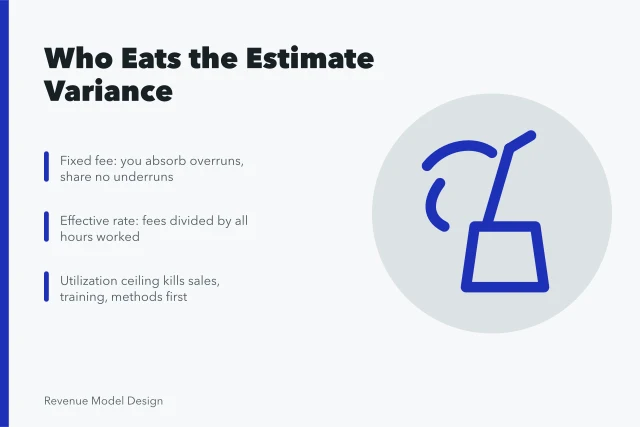
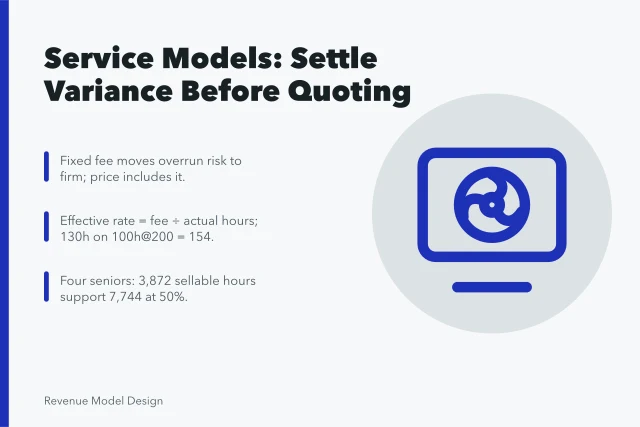
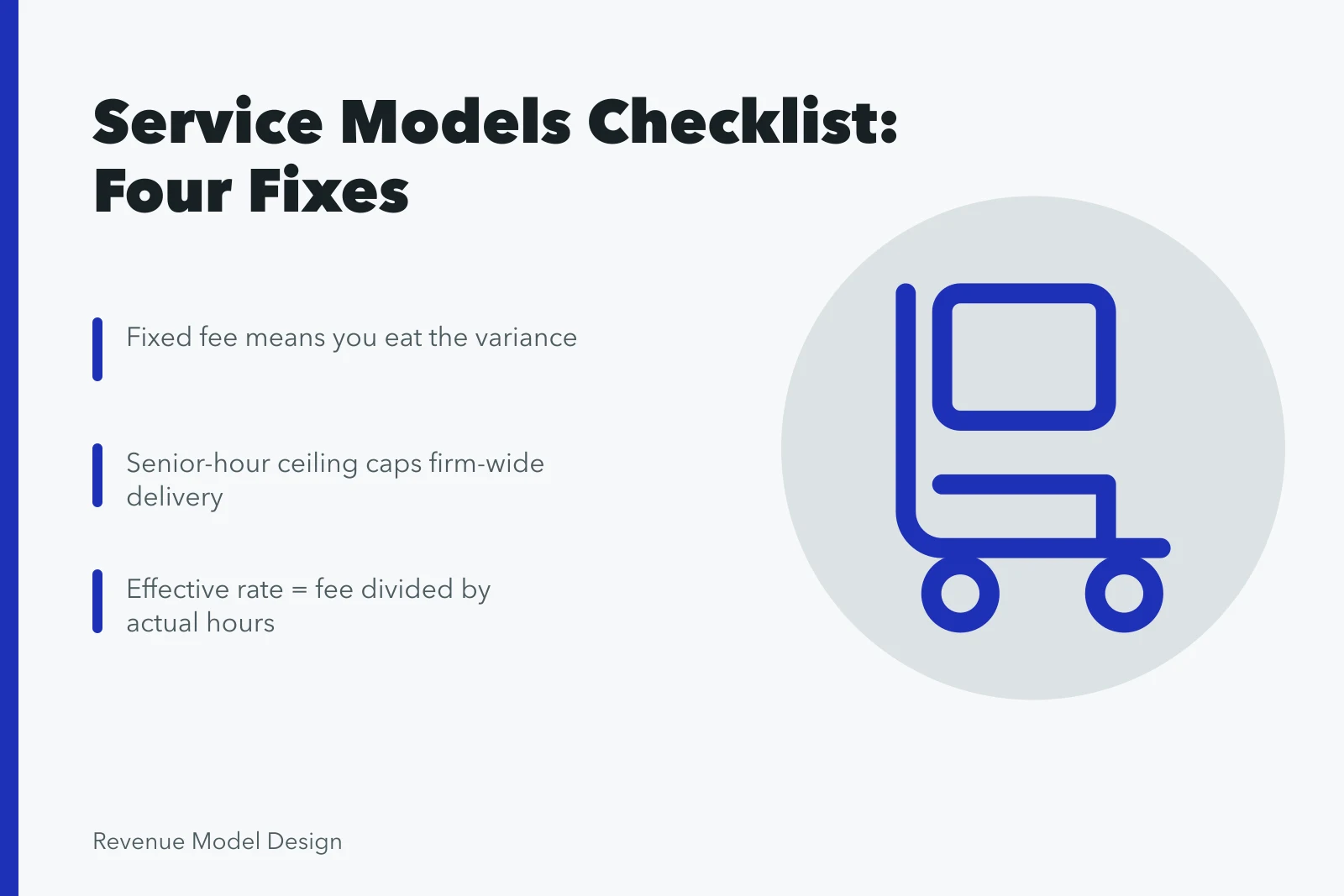
- Who eats the variance? Name the party that pays when the work takes longer than expected. Fixed fee means you do. Time and materials means the client does. Anything in between needs a written trigger for the switch, and a contract term that fails to say when a promise has been performed is the ordinary source of a later argument: the doctrine of breach of contract turns on exactly that wording.
- Does the estimate include review, rework, and the meetings? Most do not, and most estimates are therefore wrong by a predictable margin that nobody ever corrects.
- What is the change process, in writing, before anyone needs it? A change order agreed at the start is administration. The same conversation in week six is a dispute.
About who delivers
- Which senior people does this engagement require, and for how many hours? Sum that across all live work. If the total exceeds their available hours, you are already late and nobody has said so yet.
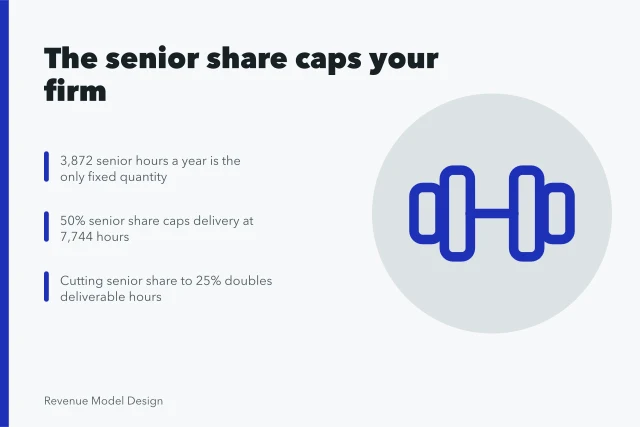
- What share of the delivered hours has to be touched by a senior name? This is the ceiling on the whole firm. Halving that share roughly doubles what the firm can deliver without hiring another partner.
- What would have to be written down for a mid-level person to run this? Usually a checklist, a set of worked examples, and a review point. That work is the cheapest capacity you can buy, and it never gets scheduled because no client is waiting for it.
- Is anyone irreplaceable on a client the firm cannot afford to lose? Write the pair down. That is a risk register entry, not a compliment.
About the money
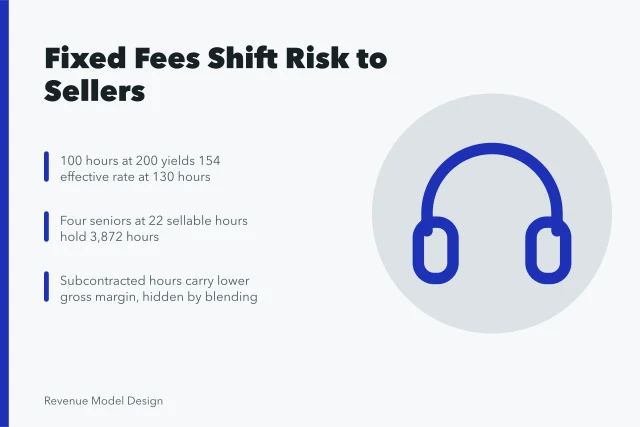
- What is the effective rate on the last ten completed engagements? Fee divided by hours actually spent. Compare it with the quoted rate. A consistent gap is a pricing problem; a scattered one is a scoping problem.
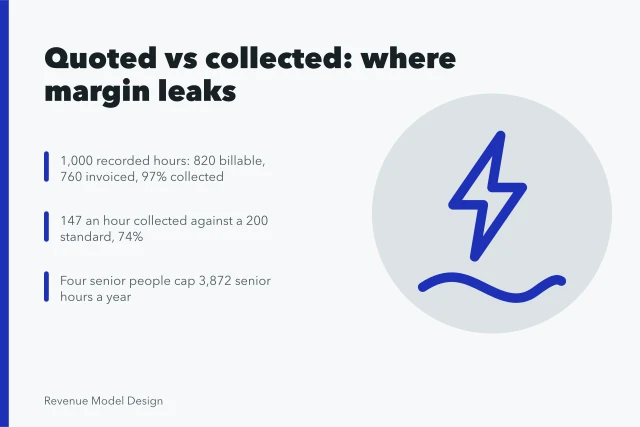
- Where in the chain does value leak? Recorded hours, billable hours, invoiced hours, collected cash. Measure the four steps separately, because each has a different owner.
- What share of revenue comes from the largest client, and the largest three? Losing a client at 30% of the book means everyone else has to grow 43% to stand still.
- When does cash actually arrive against when payroll leaves? A profitable service firm can run out of money, and the gap between delivery and collection is where that happens. The distinction between when income is earned and when it is received is the same one the tax rules draw between accounting methods, set out in IRS Publication 538.
What to do with the findings
Sort them into three piles rather than a single list. Which pile an item lands in depends on how the firm's capacity actually works, which is the argument in service models.
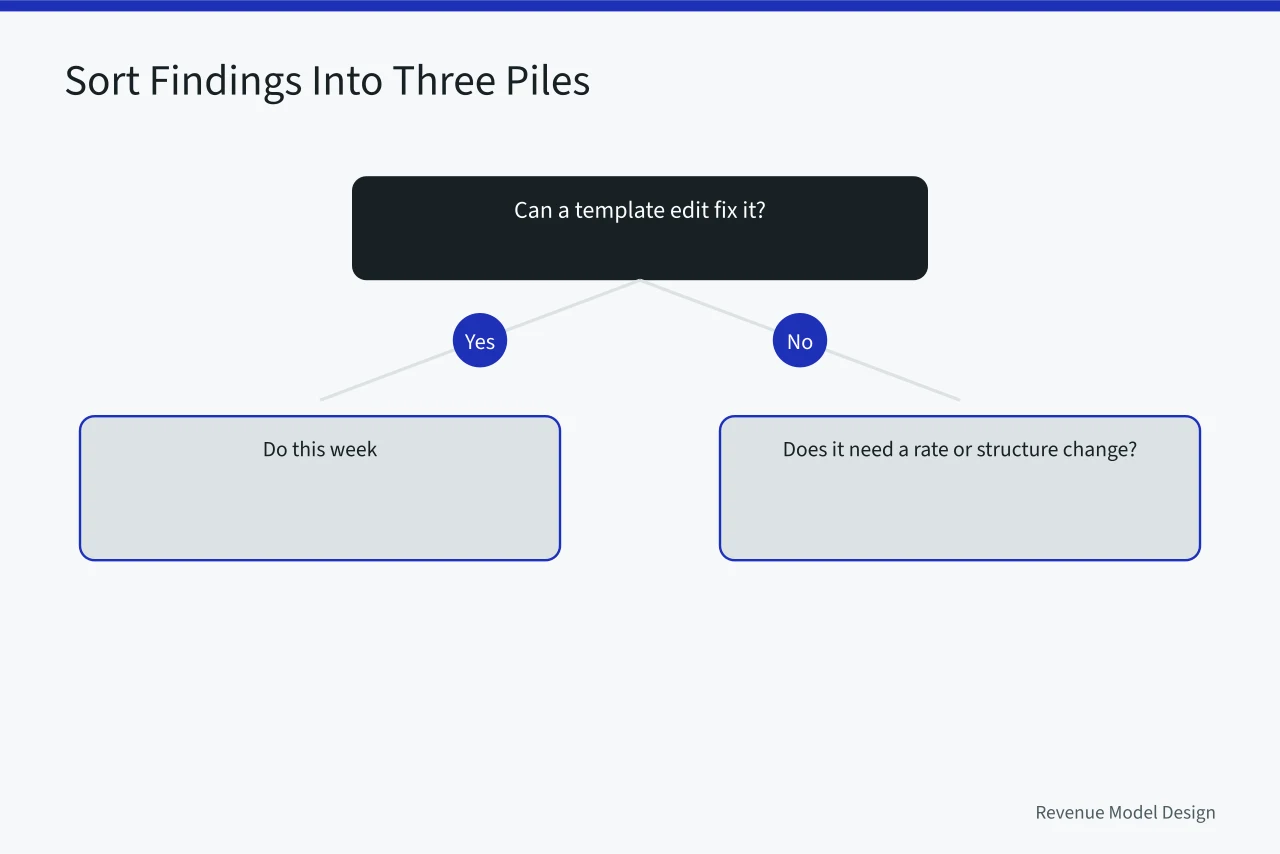
- Things fixed by editing a template: the engagement letter, the change order, the estimate worksheet. Do these this week.
- Things fixed by a rate or a structure change. These need the sequence in pricing architecture, because changing a structure on live clients is a separate project from deciding it is wrong.
- Things fixed only by building capability in people who are not senior. These are slow, and they are the only ones that raise the ceiling. Put them on a quarterly plan with a named owner.
A review that produces twelve findings and no owner produces twelve findings again next quarter. The wider question of when the shape of the firm itself has to change, rather than its documents, is the subject of model innovation, and the underlying arithmetic of hours against fees sits in unit economics.
Common questions
We are three people. Is this too heavy?
Items 1, 2, 9 and 11 are the ones that matter at three people. The rest assume a delivery team that can be structured. Run the four, and add the others as the firm grows.
How long should this take?
An afternoon if the timesheets and contracts are in one place, and a week if they are not. Finding out that they are not is itself a result worth having.
Should clients see any of this?
The change process and the scope definition, yes, and stating them plainly at the start tends to make the relationship easier rather than harder. The rate and concentration analysis is internal.
What if the answer to item 5 is that we are already over capacity?
Then the decision in front of you is which engagement moves, not how to work harder. Firms that skip that decision deliver all of them late, which costs more than delaying one on purpose.